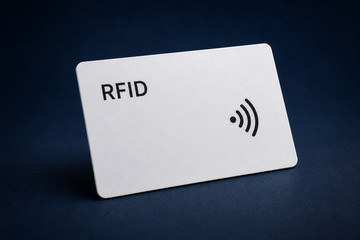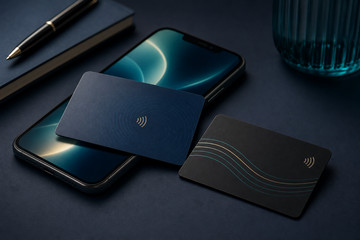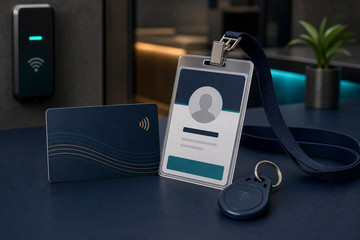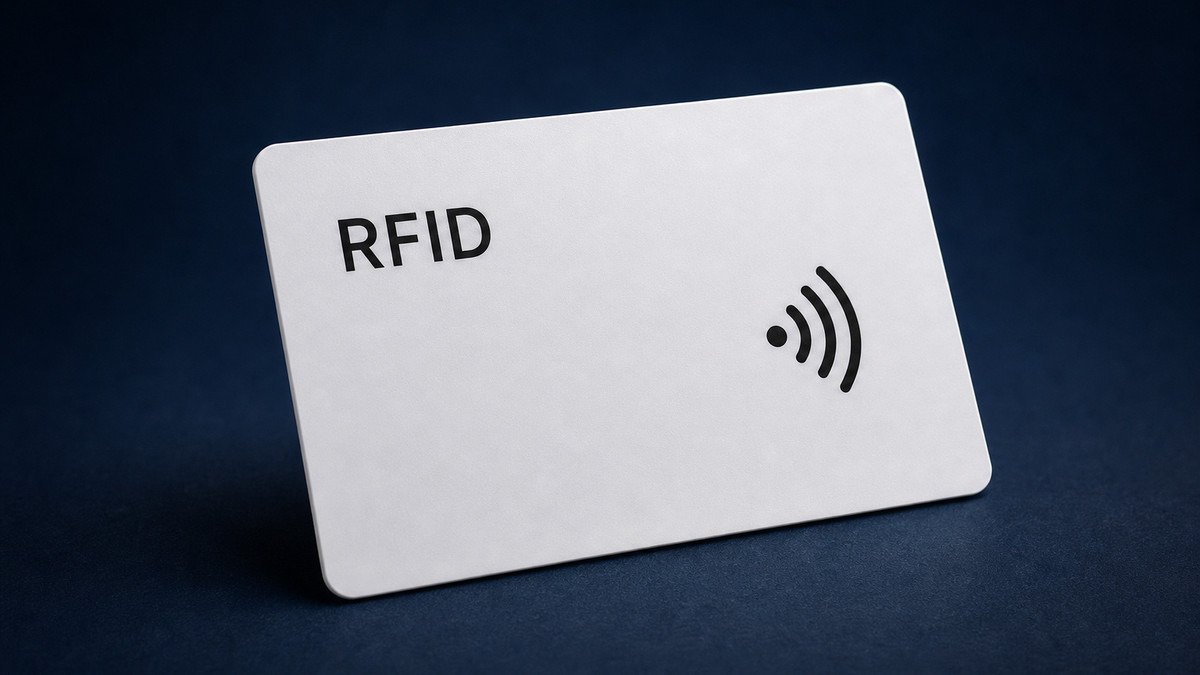
RFID uses a chip and antenna with a compatible reader.
The reader energises or communicates with the credential and passes an identifier or agreed data to the connected software. The system—not the printed card alone—decides what that information means.
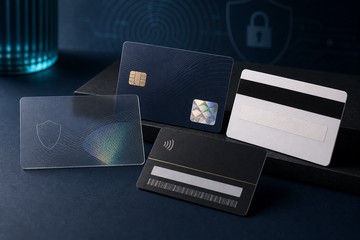
Visually similar credentials may use different chips, frequencies and protocols. Do not infer compatibility from the artwork, colour or outer shape of an old card or keyfob.
NFC is a short-range contactless interaction within the wider RFID family.
NFC is commonly used for close-range taps with compatible phones or 13.56 MHz systems, but not every RFID credential is NFC-compatible and phone behaviour varies by device, settings and programmed action.
For an NFC business card, the customer supplies and maintains the digital destination. For access, membership or other system uses, the provider must confirm the exact credential and data requirements.
Choose the physical format after the system requirement is known.
Cards, keyfobs, tags, labels, wristbands or other formats may be available for suitable projects, but the current product, chip, print area and use must be confirmed before quotation.
PlasticCard.nz supplies the agreed physical credential and any supported printing, personalisation or encoding included in the quote. Readers, software, databases, permissions, integration and ongoing support remain with the customer and its provider.